
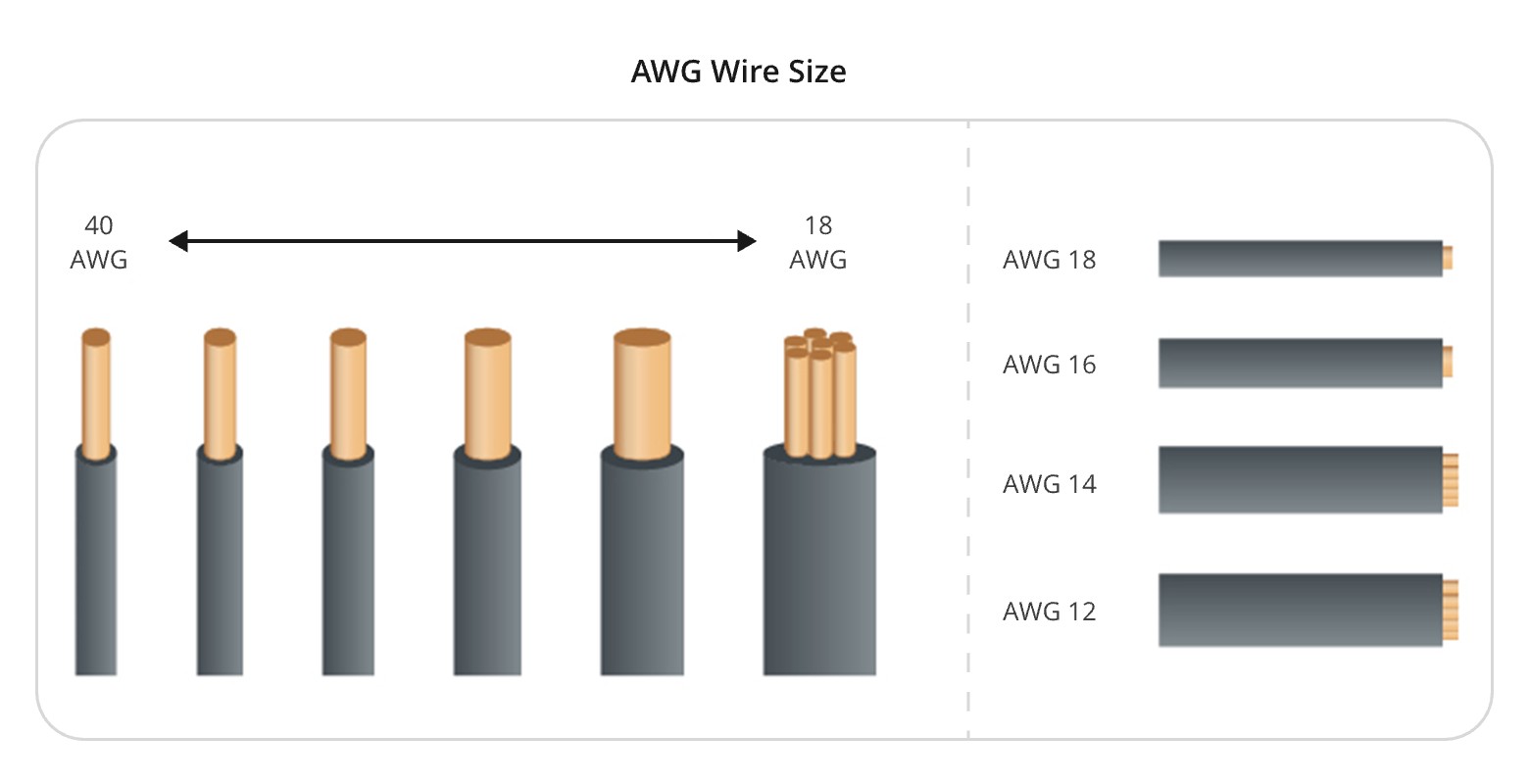
The cable 12 AWG is a common specification in electrical installations and cable selection, widely used in residential equipment, industrial and lighting circuits.
Many people wonder: How much current can a power cable really carry? 12 AWG?
In fact, There is no single answer to this question., since the current carrying capacity depends on multiple factors, such as conductor material, insulation type and installation environment.
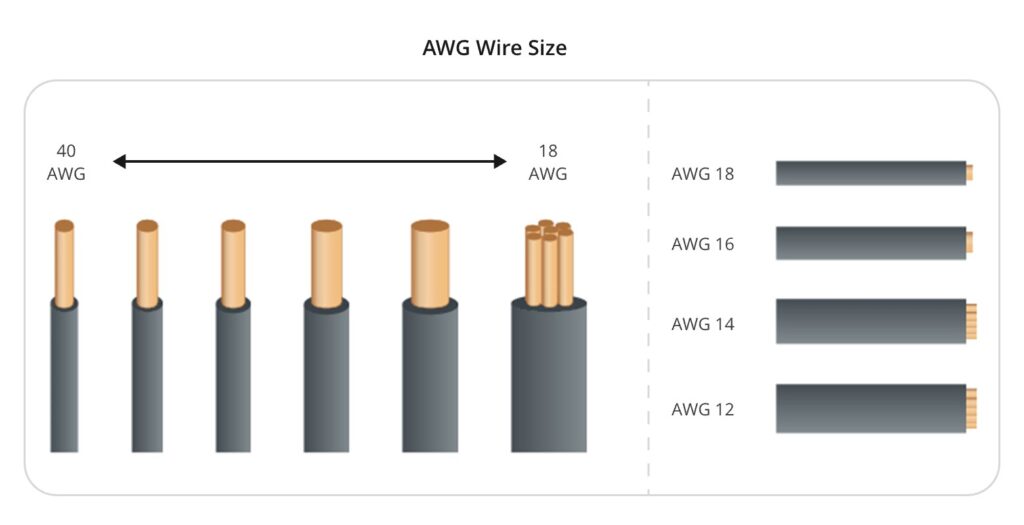
Basic cable specifications 12 AWG
The cable 12 AWG refers to the conductor gauge according to the American Wire Gauge Standard.
Its main parameters are the following:
| Parameters | Numerical Values |
| Driver Diameter | Driver diameter |
| Cross section | ca.. 3,31 mm² |
| Common materials | Copper/Aluminum |
| Common voltage ratings | 300 V/600 V |
This cable specification is commonly used in:
- Domestic circuits
- Plug wiring
- Powering small devices
- Wiring air conditioning and kitchen appliances
Current carrying capacity of a cable 12 AWG
In most countries, Current carrying capacity is generally calculated according to NEC standards.
The rated current for a copper cable of 12 AWG is usually:
| Temperatura nominal | Maximum current |
| 60°C | 20A |
| 75°C | 25A |
| 90°C | 30A |
Nevertheless, in actual electrical design, Standard household circuits are often used for 20 A.
For example:
- Home socket circuits
- Small appliances
- Microwave oven circuits
Therefore, the copper wire 12 AWG is typically used for circuit breaker circuits. 20 A.
Current carrying capacity of an aluminum cable 12 AWG
Aluminum has lower electrical conductivity than copper, so an aluminum wire of the same gauge carries less current.
Usually, The current carrying capacity of an aluminum wire 12 AWG is approximately:
| Temperatura nominal | Maximum current |
| 60°C | 15A |
| 75°C | 20A |
| 90°C | 25A |
In most engineering applications, gauge aluminum wire 12 AWG is usually designed for 15 A.
For this reason, copper wire is preferred in many residential circuits.
Key factors affecting current carrying capacity
The actual current a cable can carry is determined not only by its specifications, but also by the following factors:
- Driver material
Conductivity:
Copper: 100%
Aluminum: Approximately 61%
Therefore, for the same specifications, copper wire has a higher current carrying capacity. - Insulation Materials: Different insulation materials have different thermal resistances. The most common insulation materials include: polyvinyl chloride (PVC), cross-linked polyethylene (XLPE), and rubber. Therefore, the higher thermal resistance, highest admissible current.。
For example:
| Insulation type | Temperature rating |
| PVC | 70°C |
| XLPE | 90°C |
| Rubber | 90°C |
- Installation method
Different installation methods affect heat dissipation. For example: pipe installation
Installing cable trays
Air installation
Underground installation
Better heat dissipation translates into greater current carrying capacity.
- Room temperature
The higher the ambient temperature, the lower the admissible current will be.
For example:
30 °C is the standard temperature.
above 40 °C, derating required.
Common cable applications 12 AWG
The wire 12# It is widely used in the following cases:
- Residential electrical systems
plug circuits
kitchen appliances
Washing machines
Microwave ovens - Commercial buildings
Lighting systems
Power for small devices - Industrial equipment
Control circuits
Low power engines
How much power can a wire number carry? 12?
Based on common systems of 120 V/220 V:
circuit 120 V (North America)
circuit 20 A:
Power:
P = V × I
P = 120 × 20
P = 2400 W
Approx.:
2,4 kW
circuit 220 V
P = 220 × 20
P = 4400 W
Approx.:
4,4 kW
How to choose the right cable specifications
When selecting cables, it is recommended to consider:
- charging current
- Nominal voltage
- Line length (tension fall)
- Installation environment
- National electrical codes
General recommendation: Cable current capacity ≥ Charging current × 1,25. This ensures long-term safe operation.
The cable 12 AWG is a very common electrical conductor specification and its current carrying capacity is as follows:
| Driver type | Recommended current |
| copper wire 12 AWG | 20 A |
| aluminum cable 12 AWG | 15 A |
On standard residential circuits:
The copper wire 12 AWG is typically used for circuits 20 A.
Nevertheless, in real engineering projects, The final allowable current must be determined considering the insulation material, the ambient temperature, laying method and electrical standards.