
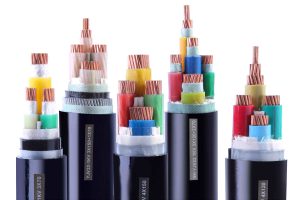
In the world of electric power transmission, cables play a crucial role in carrying electricity from its generation to the points of consumption. Nevertheless, not all cables are the same, and one of the fundamental aspects that distinguishes them is their ability to withstand different levels of tension. In this article, we will explore the differences between high and low voltage cables, analyzing its characteristics, applications and technical considerations.
HV Cable

high voltage cables (HV cable, for its acronym in English) They are a crucial component of the electrical infrastructure that enables the transmission and distribution of electrical energy over long distances and in large quantities.. These high voltage cables they are designed to withstand extremely high voltages and must be able to carry large amounts of power safely and reliably.
On this page, you can find detailed technical information on the different types of high voltage cables, its specific characteristics and applications. News and advances in HV cable technology are also published., as new materials and manufacturing techniques that allow the construction of more efficient and higher capacity cables.
Why High Voltage Cables Don't Have an Insulation Layer?
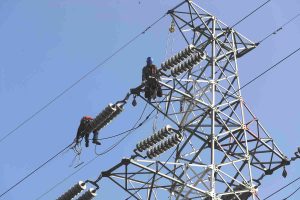
In daily life, all the cables we use are covered with insulation to prevent electric shock. But, Why do high voltage cables use bare conductors without insulation?? In fact, this is due to the voltage level and the characteristics of the cable.
The Highest Power Line in the World: Changji-Guquan Power Line 1100 kV
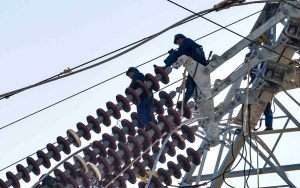
The Changji-Guquan high voltage direct current transmission line of China is the highest voltage level project, largest transmission capacity and longest transmission distance in the world.
Prysmian Wins IMR Contract for Submarine HV Cables in France
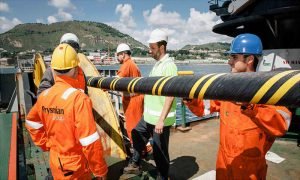
The Prysmian Group has signed a contract with the French operator of transmission systems Réseau de Transport d'Électricité (RTE). Will provide inspection services, maintenance and repair (IMR) of the HV submarine cables connecting three offshore wind farms off the Normandy coast.
The World's First HVDC Cable Made with Low Carbon Copper
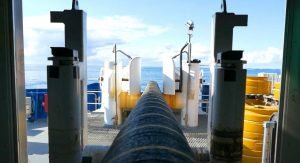
NKT is supplying the first HVDC cable (high voltage dc cable) of the world made with low-carbon copper to Dogger Bank C. The 320kV HVDC cable is developed by SSE Renewables, Equinor and Eni Plenty.
Why Electricity Is Transmitted at High Voltage? The Principle of High Voltage Transmission
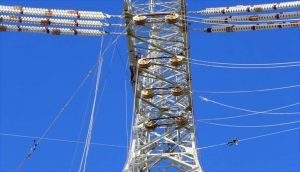
High-voltage transmission is a key step in large-scale electricity transmission. Usually, high voltage transmission is long distance transmission. So, why use the dangerous HV lines to transmit electricity? In fact, the main purpose of using high voltage is to reduce unnecessary losses in transmission over long distances.
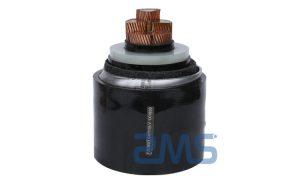
What Are The Differences Between HV Single-Conductor And Multi-Conductor Cables?
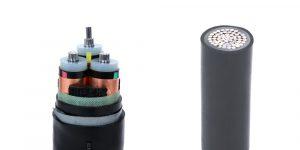
The most commonly used high-voltage cables are single-conductor and multi-conductor cables. 3 threads. Single-conductor cables are often used for the transmission of DC and AC current unidirectional, as well as for the oil-filled and inflatable lines of 60 kV and above. Three-conductor cables are mainly used in three-way AC networks..
World's First 35kV Superconducting Cable Passes Heavy Load Test
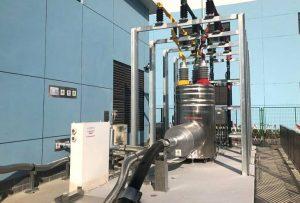
The 29 of July, Shanghai Electric Power Company organized a large load test on 35kV superconducting cable. Via 9 continuous hours of operation with a high load current of more than 1000A and a maximum of 1289A, it was initially verified that this cable has the ability to work with large loads.
RPG Gets An Order From 100 km of submarine cables 66 KV in Germany
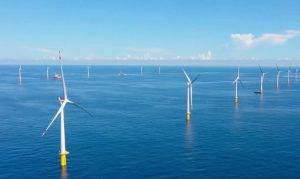
Submarine cable service provider JDR, based in the UK, just got a contract Seaway 7 ASA to supply the submarine cables of 66 KV for EnBW He Dreiht offshore wind farm, in Germany.